Since 1998

Licensed provider of company formation and corporate services

EU AIFM Licence: Investment Management Company in the EU

A Baltic AIFM licence (Lithuania, Latvia or Estonia) lets you manage and market alternative funds to professional investors across the EEA.Get there at around half the cost of Luxembourg or Ireland, with a 4 to 6 month timeline.

  • Local Baltic legal teams
  • AML & ongoing compliance solutions
  • 500+ licensing projects
View packages & pricingGet a free assessment

Free, no-obligation assessmentWe reply within 1 business day

Limited AIFM
Below €100M AUM threshold
Full AIFM
Authorisation with EU passport
4 to 6 months
Registration to full authorisation
~50% lower
Setup cost vs Luxembourg / Ireland
EU passport
Professional marketing across the EEA

Overview

Baltic AIFM: EU-regulated alternative fund management

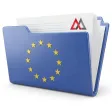
EU AIFM licence documents in a folder with the EU flag and the MAXCORP logo

An Alternative Investment Fund Manager (AIFM) authorisation under AIFMD is the EU licence for investment funds outside UCITS: private equity, venture capital, private credit, real estate, hedge and crypto-asset funds. Lithuania, Latvia and Estonia offer the EU’s most cost-efficient path to AIFM status, with Limited AIFM registration or full authorisation in 4 to 6 months.

  • AIFMD-regulated status, recognised by institutional investors across all 30 EEA countries

  • Marketing passport to professional investors in every EEA country (full AIFM only)

  • Limited AIFM for funds below €100M AUM, with simpler registration and depositary rules

  • 0% on retained earnings in Estonia and Latvia, investment income exemption for fund vehicles

  • 4 to 6 months to registration or full authorisation, faster than Luxembourg or Ireland

  • Tier-1 banking and depositary access, with the same EU custody services as Luxembourg peers

AIFMD II applies across EU member states from April 2026, tightening depositary, governance, liquidity and reporting rules for alternative funds. Pre-marketing or marketing a similar strategy in the EU voids any reverse solicitation claim for 18 months (AIFMD Article 30a), so active engagement with European limited partners now requires a licensed EU AIFM or marketing passport. Our Gold readiness audit compares the three Baltic jurisdictions for your fund before you commit to an application. A Baltic-domiciled AIFM is the most cost-efficient route to securing that EU presence.

Coverage

Is an EU AIFM licence right for your fund?

The AIFMD framework covers any collective investment vehicle that raises capital from a defined group of investors under a specified strategy outside the UCITS regime. An EU AIFM licence is particularly well suited to the three profiles we serve most often. Limited AIFM registration fits emerging managers below €100M AUM, while full AIFM authorisation is the right path for funds targeting institutional LPs across the EU.

VC / growth equity fund

Limited AIFM

You need: to raise €10M to €100M from professional investors for a venture or growth-stage equity fund, typically structured as a 5 to 10 year closed‑end vehicle.

Registration gives you: Limited AIFM status with the Bank of Lithuania, Latvijas Banka or the Estonian FSA, NPPR-based marketing to EU professional investors, and simplified depositary obligations at the lowest EU cost base. Typical clients: US ERAs and EU emerging managers.

Private equity / credit fund

Full AIFM

You need: to raise €100M+ from EU institutional LPs with cross-border marketing rights, a robust governance framework and full AIFMD passport coverage.

Authorisation gives you: fully authorised AIFMD status, EU marketing passport across all 30 EEA countries, Tier-1 depositary access and institutional governance at roughly half of Luxembourg operating cost. Typical clients: US RIAs, Canadian PE and credit managers, UAE / DIFC managers.

Digital assets / crypto AIF

LT / EE

You need: a regulated fund wrapper to invest in crypto-assets, tokenised securities or digital-native strategies with institutional-grade governance for professional LPs.

Authorisation gives you: an AIFMD-compliant fund structure, MiCA-coordinated compliance and the Bank of Lithuania’s fintech-experienced supervisory track record for digital asset strategies. Typical clients: digital-asset managers, tokenisation platforms and Web3 funds.

Why choose the Baltics for your AIFM?

The Baltic states combine full AIFMD-regulated status with a cost structure and regulator responsiveness that traditional EU fund hubs cannot match. Lithuania, Latvia and Estonia deliver the same EU/EEA passporting rights, Tier-1 banking access and investor-protection standards as Luxembourg or Ireland at a fraction of setup and ongoing expense.

  • Materially lower setup costs

    Baltic setup costs run materially lower than Luxembourg, Ireland and other established EU fund hubs, for both Limited AIFM registration and full authorisation. Local regulators are more pragmatic and the mandatory service provider ecosystem is leaner.

  • 4 to 6 month regulator timeline

    Registration and authorisation complete in 4 to 6 months across all three Baltic regulators, including incorporation, documentation, NCA engagement and post-approval setup. Luxembourg’s CSSF takes 8 to 18 months under current volumes.

  • Limited AIFM flexibility

    Funds below €100M AUM (or €500M unleveraged closed-end) qualify for simplified registration and depositary-lite arrangements, cutting the fixed annual fund overhead by up to 90% versus the full regime.

  • Fractional compliance teams

    Baltic regimes expressly permit outsourced MLRO and Compliance Officer appointments through specialised providers, removing the need for full-time in-house governance during early fund lifecycle stages.

What’s covered: Limited AIFM vs full AIFM authorisation

Baltic AIFMD regimes split into two distinct products for two different stages of fund maturity. Limited AIFM registration is the fastest and most cost-efficient entry for emerging managers, while full authorisation unlocks the EU/EEA marketing passport and is the right path for institutional-scale funds targeting cross‑border distribution.

Limited AIFM registration (sub-threshold)

Registration

For managers with AUM below €100M (including leverage) or below €500M for unleveraged closed-end funds, under AIFMD Article 3:

  • Simplified NCA registration, not full authorisation
  • NPPR-based marketing to EU professional investors
  • Fractional compliance teams permitted: outsourced MLRO and CO via a service provider
  • Depositary-lite arrangement (non-bank oversight)
  • Annex IV reporting with reduced frequency
  • Transition to full authorisation when AUM grows

Ideal for emerging managers, first-time fund launches and sub-€100M venture or private equity funds.

Full AIFM authorisation

Licensed

For managers above the Limited AIFM AUM threshold or seeking the full EU/EEA marketing passport from day one, under AIFMD Article 6:

  • Unlimited AUM, no threshold cap
  • Full EU/EEA marketing passport across all 30 EEA countries
  • Full governance: Conducting Officers, MLRO, Risk Manager
  • Tier-1 depositary arrangement with an EU credit institution
  • ICAAP, Annex IV and full prudential reporting
  • Institutional LP readiness for pension funds and insurers

Required for funds seeking pan-EU distribution, larger AUM and institutional LP subscriptions.

Comparison

Baltic AIFM comparison: Lithuania vs Latvia vs Estonia vs Luxembourg

The table below compares the three Baltic AIFM regimes against Luxembourg, the EU’s traditional default fund domicile. All three Baltic states offer full AIFMD-authorised status with an EU/EEA marketing passport, but each has distinct strengths on timeline, capital, tax and vehicle structure. Luxembourg remains the benchmark for the largest institutional funds, though its cost and timeline profile is materially higher across the board.

Baltic AIFM comparison: Lithuania vs Latvia vs Estonia vs Luxembourg
FactorLithuania (BoL)Latvia (Latvijas Banka)Estonia (Estonian FSA)Luxembourg (CSSF)
Limited AIFM registration3 months (+3 extension)1 monthUp to 2 monthsAvailable (Art. 3(3))
Full AIFM authorisation timeline3 to 6 months3 to 6 months3 to 6 months8 to 18 months practical
Minimum capital, Limited AIFMPer legal form€15,000€25,000 (€50,000 within 3 months)No specific minimum
Minimum capital, full AIFM (external / internal)€125,000 / €300,000€125,000 / €300,000€125,000 / €300,000€125,000 / €300,000
Standard vehicle / legal formKŪB (limited partnership)Contractual / LP / JSCLPF (limited partnership)SCSp legal form + RAIF/SIF/SICAR regime
EU/EEA marketing passport (full AIFM)YesYesYesYes
Depositary for Limited AIFMsFlexible arrangementsCustodian rules applyNot mandatory (small managers)Depends on vehicle
Setup from (our packages)From €50,000From €50,000From €50,000Not covered

Informational only. Capital and cost figures are indicative. Contact us for a tailored jurisdiction comparison.

Jurisdictions

Three Baltic jurisdictions for your AIFM

MAXCORP covers all three Baltic states for AIFM registration and authorisation, each offering full AIFMD licensing, EU/EEA passporting rights and a responsive NCA process. The optimal choice depends on your fund strategy, AUM target, governance preferences and tax position. Lithuania is the most common starting point for full AIFM authorisation with an EU/EEA passport, while Latvia and Estonia each offer specific advantages for Limited AIFMs.

  • LithuaniaBank of Lithuania

    • Full AIFM authorisation with EEA passport
    • Informed Investor Fund (KŪB) vehicle
    • Fintech-experienced regulator
    • Mature fund administrator ecosystem
    Enquire about Lithuania
  • LatviaLatvijas Banka

    • Registered manager approval in about 1 month
    • €15,000 minimum capital for registered managers
    • 0% tax on undistributed profits
    • One regulator for licence and AML
    Enquire about Latvia
  • EstoniaEstonian FSA

    • Limited Partnership Fund (LPF) vehicle
    • Limited AIFM registration in about 60 days
    • 0% corporate tax on retained earnings
    • Digital-first ecosystem with e-Residency
    Enquire about Estonia

Jurisdiction selection is part of the Gold readiness audit, based on your fund strategy, AUM target and tax position.

Pricing

AIFM licensing packages

Three service tiers to match different stages of readiness and fund scope. The Gold readiness audit is a standalone assessment for managers evaluating jurisdictions and planning an EU AIFM. Platinum delivers the full Limited AIFM registration in one Baltic jurisdiction, the right path for emerging managers below €100M AUM. Custom covers full AIFMD authorisation with EU/EEA marketing passport, tailored for institutional funds that need cross-border distribution and complete governance infrastructure.

Gold

AIFM readiness audit

€15,000fixed fee

Written legal opinion on your fund structure against AIFMD. Includes a jurisdiction recommendation across Lithuania, Latvia and Estonia, regulatory gap analysis and a project roadmap with cost and timeline estimate.

  • Written legal opinion on your fund structure
  • Jurisdiction recommendation (LT / LV / EE)
  • Regulatory gap analysis
  • Project roadmap with cost and timeline
  • Delivered in 2 to 3 weeks

Platinum

Limited AIFM

€50,000

Full package for a registered Limited AIFM in one Baltic jurisdiction. Includes company formation, NCA registration, AML/CFT policy pack, outsourced MLRO appointment and NPPR‑based marketing support.

  • EU management company (UAB / SIA / OÜ)
  • Limited AIFM registration with the NCA
  • AML/CFT policy package
  • Outsourced MLRO appointment
  • Depositary-lite arrangement
  • NPPR-based marketing (no EU passport)
  • 4 to 6 months, no travel required

Custom

Full AIFM

From €120,000

Full AIFMD-authorised management company with EU marketing passport. Includes complete governance setup, Tier-1 depositary arrangement, NCA liaison and optional ongoing compliance retainer.

  • Everything in Platinum
  • Full AIFMD authorisation (Article 6)
  • EU/EEA marketing passport
  • Conducting Officers, MLRO and Risk Manager
  • Tier-1 depositary arrangement
  • Optional ongoing compliance retainer

* Pricing is indicative and subject to final confirmation. Prices exclude VAT. Company formation, share capital, NCA supervisory and depositary fees are separate. The EU/EEA passport requires full AIFM authorisation.

Process

Steps towards setting up a Baltic AIFM

  1. Step 1

    Initial consultation & fund strategy

    We assess your fund strategy, AUM targets and investor base, then recommend the optimal Baltic jurisdiction and regime: Limited AIFM registration or full AIFMD authorisation.

  2. Step 2

    Company incorporation & documentation

    We incorporate your management company (UAB, SIA or OÜ), prepare the AML/CFT policy pack, governance framework and full NCA application package.

  3. Step 3

    NCA registration or authorisation

    We file with the relevant Baltic NCA, manage supplementary information requests and coordinate pre-authorisation meetings with regulator teams.

  4. Step 4

    Post-authorisation compliance support

    Once registered or authorised, we assist with Annex IV reporting, the MLRO function, investor onboarding and periodic regulatory filings to the NCA.

Requirements

Legal framework and requirements in the Baltic AIFMD regimes

The legal framework is governed by the Alternative Investment Fund Managers Directive (AIFMD, Directive 2011/61/EU) as updated by AIFMD II (Directive (EU) 2024/927). Baltic member states have transposed AIFMD through national legislation: Lithuania’s Law on Managers of Alternative Collective Investment Undertakings, Latvia’s Law on Alternative Investment Funds and their Managers, and Estonia’s Investment Funds Act. AML/CFT obligations are consolidated under the EU’s new Single Rulebook (AMLR) and harmonised enforcement will start through AMLA (Frankfurt) from 2028. We prepare the complete AIFM application pack, policy documentation and governance framework, manage the full NCA engagement and prepare the submission across all three Baltic jurisdictions.

Documentation

For review and preparation of the AIFM licensing project we will ask for the following preliminary documentation:

  • Valid copy of the passport from each country of citizenship: certified true copy for all participants in the structure
  • Power of Attorney (PoA): we provide the PoA so we can represent you before the NCA
  • Fund strategy and business plan overview: investment strategy, target AUM, fundraising plan and three‑year financial projections
  • CV and track record for key participants: GP / portfolio manager, MLRO, Compliance Officer and Risk Manager track record and education
  • Source of funds documentation: evidence of a legitimate source for seed capital and initial fund commitments

All listed documentation must be certified by a notary public and apostilled, in English or with a sworn English translation. At the first stage, we gather all information and provide a step‑by‑step process overview tailored to your fund structure and chosen jurisdiction.

Procedures

Our compliance team prepares the internal procedures and the full NCA application pack so your AIFM is set up to meet AIFMD requirements, AML/CFT standards under the EU Single Rulebook (AMLR), and national transpositions in Lithuania, Latvia or Estonia. Selected key components include:

  • AML/CFT policy and business‑wide risk assessment
  • KYC/CDD procedures for investor onboarding, including UBO identification
  • Investment policy and risk management framework
  • Liquidity management rules and redemption gate provisions where applicable
  • Valuation policy and independent valuation arrangements
  • Conflict of interest and best‑execution policies
  • Outsourcing and delegation framework for MLRO, CO and administrative functions
  • Annex IV reporting templates and ongoing supervisory filing schedule

Substance requirements

Baltic regulators require genuine operational presence in the licensing jurisdiction, not a letterbox setup. In practice this means a minimum of 2 to 4 locally engaged professionals filling key regulatory roles for the life of the AIFM. Requirements scale with the chosen regime:

  • Limited AIFM: typically a locally based AML/CFT officer (MLRO equivalent) and compliance support, with the exact configuration confirmed against the chosen jurisdiction and NCA expectations. Outsourcing is generally possible, with the AIFM retaining legal responsibility and oversight.
  • Full AIFM authorisation: effective senior management must be located and empowered in the Member State, with risk management, compliance and AML/CFT functions proportionate to the business. Key persons are subject to NCA fit‑and‑proper assessment.
  • Registered office: required in the licensing jurisdiction for both regimes. A physical meeting space available to the regulator is expected.
  • Minimum capital: for registered (Limited AIFM) managers, Lithuania varies by fund legal form, Latvia requires €15,000, and Estonia requires €25,000 (to be increased to €50,000 within 3 months of establishment). For full AIFM authorisation under AIFMD Article 9: €125,000 for externally managed AIFMs and €300,000 for internally managed AIFMs.

MAXCORP provides the full local substance solution across all three Baltic jurisdictions, including outsourced MLRO, Compliance Officer and Risk Manager appointments and registered office services through our local partners.
Taxation

  • Lithuania: 17% standard corporate income tax from 1 January 2026 (up from 16%), with a reduced 7% rate for small entities (annual revenue under €300,000) and 0% for newly registered small entities in their first and second taxable periods. Certain collective-investment-vehicle exemptions may apply, but scope and conditions must be confirmed for the selected vehicle and investor base.
  • Latvia: 0% CIT on undistributed profits. Distributed profits are taxed at 20/80 (25%). AIF vehicles benefit from investor-level tax treatment with minimal fund‑level friction.
  • Estonia: 0% corporate income tax on retained and reinvested profits. Only distributed profits are taxed, at 22/78 (approximately 28%). Investment income of fund vehicles is generally tax‑exempt.
  • Fund vehicle taxation: limited partnership fund structures may be fiscally transparent or otherwise tax-efficient; the result depends on the precise vehicle, investors and source jurisdictions.
  • VAT: management of qualifying special investment funds can be VAT-exempt under Article 135(1)(g) of Directive 2006/112/EC, as implemented and interpreted by each Member State.

Our tax team can build a tailored solution specific to your fund structure, investor base and target jurisdiction. The double tax treaty networks of Lithuania, Latvia and Estonia cover the US, Canada, UK, UAE and most OECD markets, supporting efficient cross‑border distribution.

Compliance and licence protection

AIFM registration and authorisation are maintained through ongoing compliance obligations. Our compliance team monitors your filings and deadlines to help keep your status in good standing. Below are the most common reasons AIFM licences are suspended or withdrawn, and how we help you avoid them:

  • AML/CFT non-compliance: failure to maintain KYC/CDD procedures, transaction monitoring or UBO registration. We provide ongoing AML support and the MLRO function.
  • Breach of AUM threshold: exceeding an Article 3 threshold without proceeding to full AIFM authorisation as required. We monitor AUM and advise on transition timing.
  • Governance failures: loss of fit-and-proper key persons in senior management, AML/CFT or risk functions. We provide outsourced fractional governance roles.
  • Article 24 / Annex IV reporting default: late or inaccurate filings to the NCA, with frequency depending on AUM, leverage and fund type. We maintain the reporting calendar and prepare all filings.
  • Investor misrepresentation: marketing to retail investors where only professional LPs are permitted. We review all marketing materials before distribution.
  • Depositary failures: loss of the depositary or a material breach of safeguarding. We maintain the depositary relationship and monitor custody.
  • Material changes not notified: ownership, strategy or key personnel changes without NCA notification. We manage all change notifications and approvals.

Administrative fines for AIFMD and AML/CFT breaches in the Baltic states can reach up to €5 million for legal entities and up to €1 million for responsible individuals. Our team supports ongoing compliance with NCA requirements to help AIFMs avoid penalties and maintain their licensing status.

FAQ

Frequently asked questions

What is an AIFM and what does AIFMD cover?

An Alternative Investment Fund Manager (AIFM) is an EU-regulated management company that operates collective investment vehicles outside the UCITS framework. AIFMD (Directive 2011/61/EU, updated by AIFMD II in 2024) covers private equity, venture capital, private credit, real estate, infrastructure, hedge strategies and crypto-asset funds marketed to professional investors across the EU.

What is the difference between Limited and Full AIFM?

Limited AIFM (sub-threshold) registration applies to managers below €100M AUM with leverage, or €500M unleveraged and closed-ended for 5 years. It requires simplified NCA registration or an equivalent national route and allows proportionate governance; depositary or custodian obligations vary by jurisdiction and fund type. Full AIFM authorisation has no AUM limit, requires full governance infrastructure and grants the EU/EEA marketing passport across all 30 EEA countries. Limited AIFMs do not receive the AIFMD passport; marketing must be assessed under each target country’s national rules, including NPPR where available. Contact us to determine which regime fits your fund.

Which Baltic country is best for my fund?

Lithuania is best for funds requiring full AIFM authorisation with EU/EEA passport, crypto-adjacent strategies or leveraging the Bank of Lithuania’s fintech-experienced regulator. Latvia offers the fastest registered manager approval at around 1 month with the lowest capital requirement of €15,000 for registered managers. Estonia suits venture capital and smaller funds with its Limited Partnership Fund vehicle and 60-day Estonian FSA registration. Contact us for a tailored recommendation based on your strategy and investor base.

How does AIFMD II affect non-EU fund managers?

AIFMD II (Directive (EU) 2024/927) entered into force on 15 April 2024, with most national implementing measures applying from 16 April 2026. It affects loan origination, delegation, liquidity management, depositary services and supervisory reporting. Separately, under the cross-border distribution framework, subscriptions within 18 months of pre-marketing may be treated as marketing for the relevant AIF or compartment, requiring an Article 31/32 notification. Registered AIFMs and non-EU managers are governed substantially by national rules. Non-EU managers should not rely on reverse solicitation as a standing distribution strategy; the practical options are a licensed EU AIFM, the full passport where available, or country-by-country NPPR / national filings.

What is the AIFM authorisation timeline?

A practical Baltic AIFM project is commonly planned over 4 to 6 months, covering incorporation, documentation, service-provider onboarding, NCA application and post-approval setup. Statutory processing times vary: Bank of Lithuania licensing review is 3 months with a possible 3-month extension; Latvijas Banka decides registered-manager applications within 1 month after complete documents and licensed-manager applications within 3 months; Estonia’s full fund-manager licensing decision is generally 2 months after all data and not later than 6 months from a proper application. The 4 to 6 month figure should be treated as a project estimate, not a guaranteed regulator deadline.

What are the AIFM capital requirements?

For registered (Limited AIFM) managers: Lithuania varies by fund legal form, Latvia requires €15,000, and Estonia requires €25,000 minimum paid-up capital at establishment, to be increased to €50,000 within 3 months. For full AIFM authorisation across all three Baltic states, AIFMD Article 9 applies: €125,000 for externally managed AIFMs and €300,000 for internally managed AIFMs. Own funds must additionally cover at least one quarter of the previous year’s fixed overheads.

Do I need a local office and resident directors?

Yes. All three Baltic regulators require the management company to maintain its registered office in the jurisdiction with effective management direction from there. NCAs conduct substance assessments and require at minimum a locally based MLRO and executive management. MAXCORP provides the full substance solution including registered office, outsourced MLRO, Compliance Officer and Risk Manager appointments via our local partners.

Can I outsource the MLRO and compliance functions?

Outsourcing AML/CFT and compliance support is generally possible, particularly for Limited AIFM structures, subject to the rules of the chosen jurisdiction. The AIFM remains legally responsible, must retain effective oversight and must satisfy local AML/CFT and NCA substance expectations. KYC/CDD data collection, sanctions screening, transaction monitoring and reporting support can often be delegated operationally, subject to written agreements and oversight. MAXCORP provides outsourced compliance support through local partners.

What is the difference between NPPR and the EU/EEA marketing passport?

The EU/EEA marketing passport allows a fully authorised EU AIFM to market qualifying EU AIFs to professional investors across the EEA through the Article 31/32 notification process. National Private Placement Regimes and other national routes are country-by-country permissions used where the passport is not available, including by Limited AIFMs and non-EU managers. NPPR availability, timing, local agent rules and fees differ by Member State.

Can an EU AIFM invest in crypto-assets?

Potentially yes, but case by case. Crypto-asset exposure is assessed by the chosen NCA, depositary / custodian and administrator. A crypto-AIF must address AIFMD risk management, liquidity, valuation, custody / safekeeping, AML/CFT and investor-disclosure issues. Where the manager or an affiliate provides crypto-asset services beyond pooled fund investment, a separate MiCA CASP authorisation may be required. Contact us to discuss combined AIFM and CASP structures.

What is a depositary-lite arrangement?

“Depositary-lite” is industry shorthand for the lighter regime under AIFMD Article 36, available where an EU AIFM markets a non-EU AIF in the EU under National Private Placement. Cash flow monitoring, asset verification and oversight can be split across providers, with negligence (not strict) liability. For Limited AIFMs in the Baltics, lighter depositary or custodian arrangements may be available depending on national regime and fund type, but Article 21 itself remains the full AIFMD depositary regime. Costs vary by provider type and should be confirmed once the specific route is selected.

What ongoing reporting is required for an EU AIFM?

AIFMs are subject to Article 24 / Annex IV-style reporting on AUM, leverage, liquidity, risk and exposures, with frequency driven by AUM, leverage and fund type. Fully authorised AIFMs also monitor own funds and submit additional NCA reports as required. AML/CFT reporting, including suspicious activity reporting, must be handled under local FIU rules. MAXCORP provides ongoing reporting support as a standalone service or within the Custom package.

Contact

Start your EU AIFM licence project

Tell us about your project and receive a tailored proposal with indicative timelines and a budget from our Baltic legal and compliance team.

What can we help with?

We reply within 1 business day.

By submitting this form you agree to our Privacy Policy. We use your details to reply to your enquiry.

Send an enquiry

Tell us about your project. We reply with next steps and a budget.

By sending this form, you agree to our Privacy Policy.We use your details to reply to your enquiry.

Book a free call

Open in a new tab

Loading the calendar…

Cookie settings

Choose which cookies we may use. Necessary cookies are always on, because the website cannot work securely without them. Cookie Policy